Beetle Lifecycle Breakdown: Stopping Infestations Before They Hatch
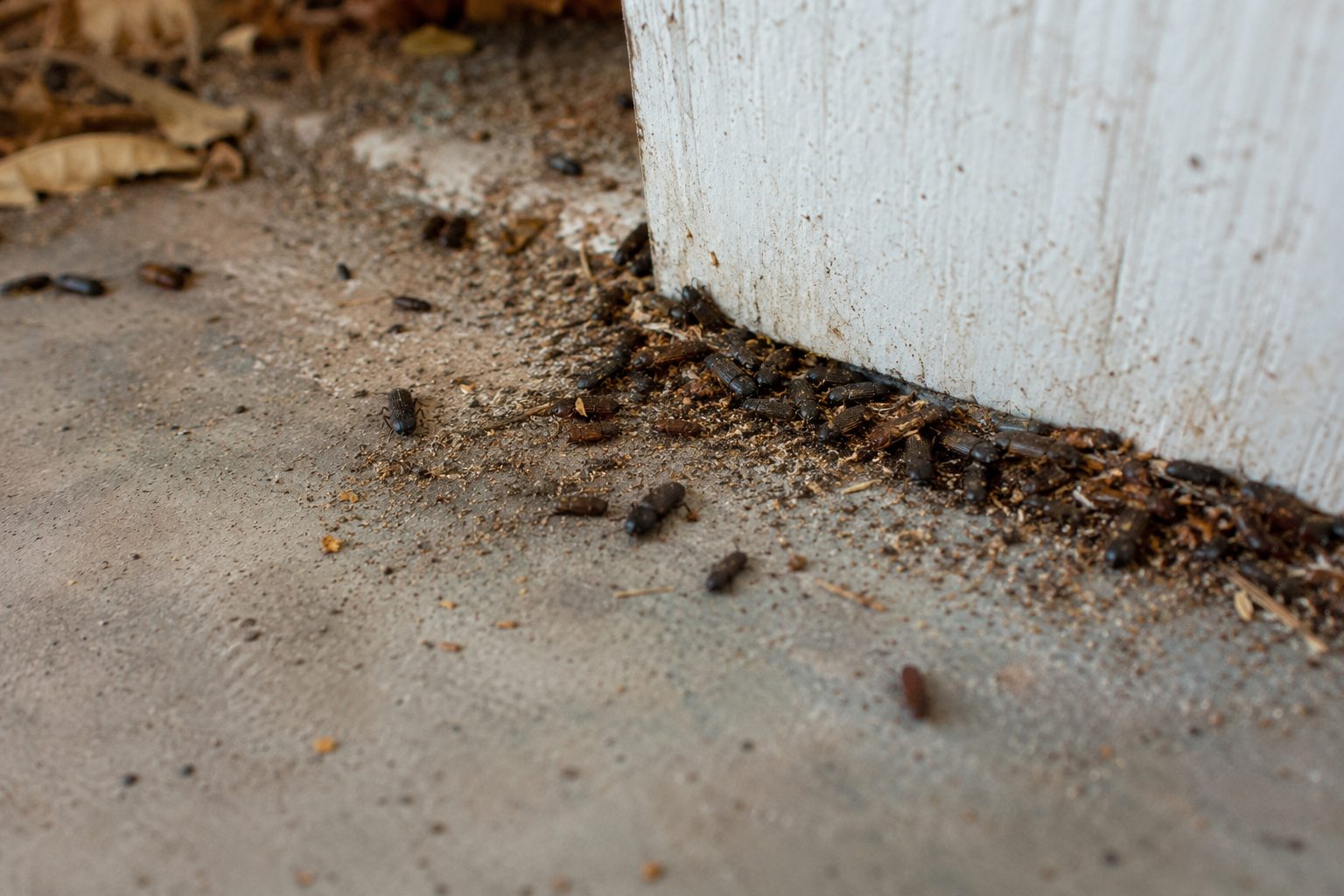
Why Shawano, WI homeowners should address beetle activity before eggs and larvae develop into a larger pest problem
Beetle infestations rarely begin with dozens of insects crawling around a home or yard. Most start quietly, with eggs hidden in soil, mulch, wood, stored materials, or other protected areas. By the time adult beetles become noticeable, the infestation may already be well established.
For homeowners in Shawano, WI, understanding the beetle lifecycle is one of the best ways to prevent recurring problems. Different beetle species target different parts of a property, but most move through the same four stages: egg, larva, pupa, and adult.
Stopping the lifecycle early is usually easier than waiting until adult beetles emerge, reproduce, and start the process again.
Why beetle problems develop around Shawano properties
Shawano and the surrounding Central Wisconsin area provide many of the conditions beetles need to thrive. Wooded properties, mature landscaping, moist soil, mulch beds, stored firewood, barns, sheds, and seasonal temperature changes can all create favorable habitats.
Some beetles remain outdoors and damage grass, trees, flowers, or garden plants. Others move into garages, basements, storage areas, or homes while searching for food and shelter.
Properties near wooded areas, fields, lakes, or heavily landscaped neighborhoods may experience more insect pressure, but beetle infestations can occur almost anywhere when the right conditions are present.
Homeowners dealing with multiple seasonal pests can learn more about broader treatment options through Pest Control Services in Shawano, WI.
Stage one: Beetle eggs are hidden from view
The beetle lifecycle begins when adult females lay eggs in an environment that gives the larvae immediate access to food after hatching.
Depending on the species, beetle eggs may be deposited in:
- Soil beneath lawns or landscape beds
- Moist mulch and decomposing vegetation
- Cracks in untreated or damaged wood
- Stored food or dry pantry products
- Carpeting, fabric, or stored household materials
- Firewood, lumber, or wooden structures
Beetle eggs are usually small and easy to overlook. That is why homeowners may not realize an infestation has started until damage or adult activity appears later.
Reducing suitable egg-laying areas is an important part of preventing beetle infestations in Shawano homes and businesses.
Stage two: Larvae cause much of the damage
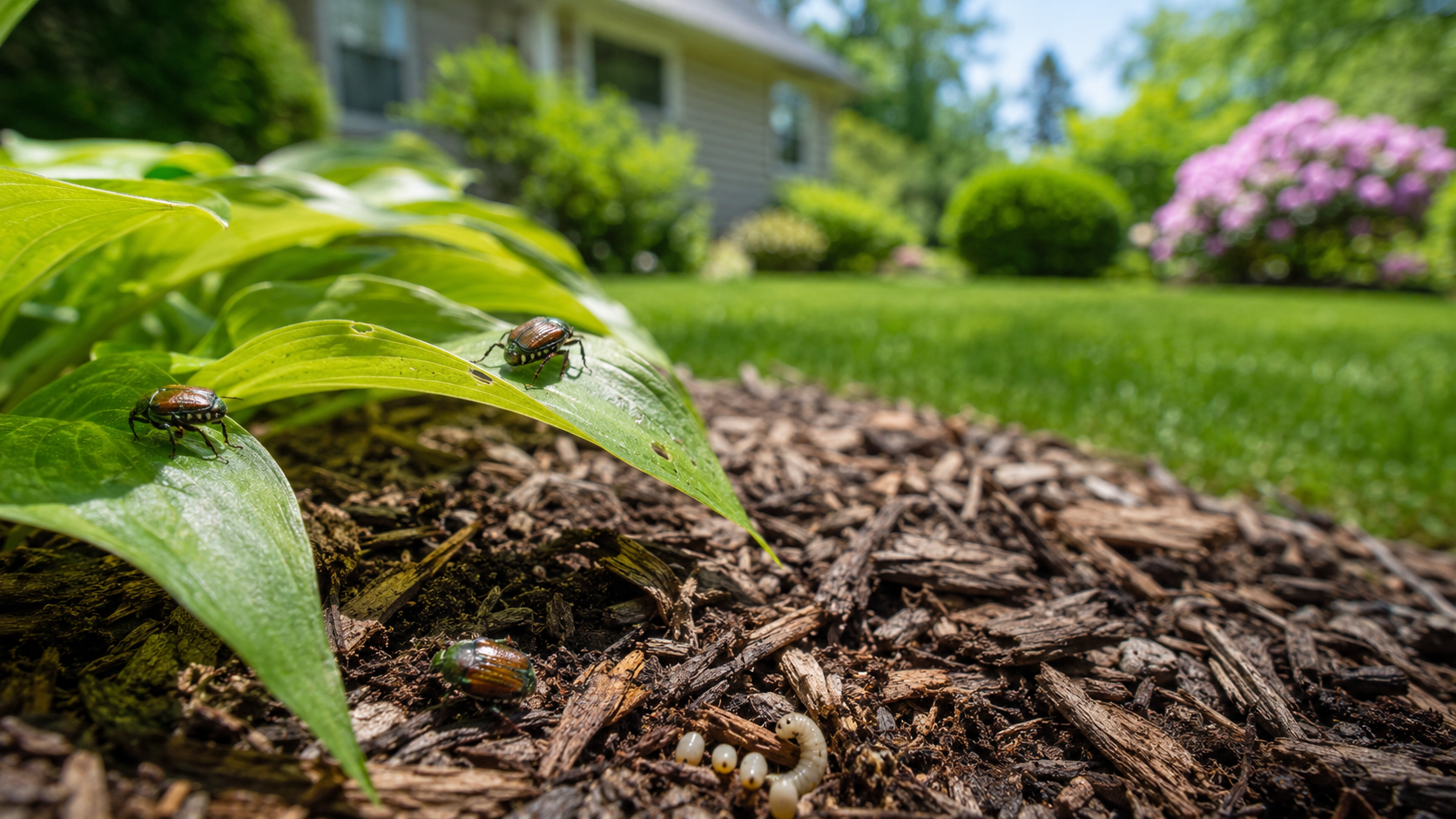
The larval stage is often the most destructive part of the beetle lifecycle. Once eggs hatch, the larvae begin feeding so they can grow and prepare for the next stage.
Beetle larvae vary widely in appearance and behavior. Lawn-damaging grubs live below the soil and feed on grass roots. Wood-boring larvae tunnel through lumber or structural wood. Carpet beetle larvae feed on natural fibers, pet hair, and stored fabrics. Pantry beetle larvae contaminate dry food products.
Because larvae often feed in concealed areas, the damage may continue for weeks or months before it becomes obvious.
Possible signs of beetle larvae include:
- Irregular brown patches in the lawn
- Grass that lifts easily from the soil
- Small holes or tunnels in wood
- Fine dust or powder near wooden surfaces
- Damage to rugs, clothing, or upholstery
- Shed skins in storage spaces
- Webbing or contamination inside food packages
If you see recurring damage without many visible insects, hidden beetle larvae may be responsible.
Stage three: Pupae prepare to become adult beetles
After the larval stage, beetles enter the pupal stage. During this period, the insect transforms into its adult form.
Pupae are usually inactive and remain concealed in soil, wood, plant material, or another protected location. Because they are not actively moving or feeding, they can be difficult to detect.
Treatment during this stage can also be challenging. The better strategy is to reduce eggs and larvae before they reach this point.
That is why routine inspections and early beetle prevention services can be more effective than reacting after adults appear.
Stage four: Adult beetles emerge and reproduce
Adult beetles are the stage homeowners notice most often. They may gather near windows, crawl across siding, feed on plants, fly around outdoor lights, or appear inside kitchens and storage areas.
Adult beetles may cause damage, but their ability to reproduce is the larger concern. Once they begin laying eggs, the lifecycle starts again.
Killing a few visible beetles does not necessarily eliminate the infestation. Eggs, larvae, or pupae may still be developing elsewhere on the property.
Successful beetle control requires identifying the species and locating the conditions that are supporting its lifecycle.
Common beetle problems around Shawano, WI
Several types of beetles can become problems around homes and properties in the Shawano area.
Japanese beetles
Japanese beetles feed on the leaves and flowers of many ornamental plants, garden crops, shrubs, and trees. Their larvae develop as grubs in the soil and can damage lawns by feeding on grass roots.
A property can therefore experience two different kinds of damage from the same insect: lawn damage from larvae and plant damage from adults.
Carpet beetles
Carpet beetles are small indoor pests that can damage rugs, clothing, upholstery, and other materials containing natural fibers. The larvae cause most of the damage and may remain hidden beneath furniture, along baseboards, or inside storage areas.
Regular cleaning and careful inspection of stored fabrics can reduce the risk, but established infestations may require professional treatment.
Pantry beetles
Pantry beetles infest dry goods such as flour, cereal, rice, spices, pet food, and birdseed. Once they enter a food package, they can spread to other products stored nearby.
Infested products should be discarded, shelves cleaned thoroughly, and remaining foods placed in sealed containers.
Wood-boring beetles
Certain beetle larvae develop inside wood and may damage furniture, trim, flooring, structural lumber, sheds, or barns. Small exit holes and powdery residue are common warning signs.
Wood-boring beetle activity should be evaluated carefully because the extent of the infestation may not be visible from the surface.
How Shawano homeowners can disrupt the beetle lifecycle
Preventing beetles is not about using one spray at the first sight of an insect. It requires changing the conditions that allow them to reproduce and develop.
Reduce moisture
Damp soil, wet mulch, leaking plumbing, poor ventilation, and moisture-damaged wood can all support insect activity.
Repair leaks, improve drainage, ventilate damp areas, and avoid overwatering lawns and landscape beds.
Maintain mulch and landscaping
Keep mulch at a reasonable depth and avoid piling it directly against siding or foundations. Remove decaying plant material, leaves, branches, and other organic debris.
Trim vegetation away from the home and inspect plants regularly for feeding damage.
Store firewood correctly
Keep firewood off the ground and away from the house. Bringing infested wood indoors can introduce beetles and other pests into the home.
Only bring in the amount of firewood you plan to use immediately.
Inspect stored food
Check dry goods before placing them in the pantry. Store flour, cereal, pet food, birdseed, and similar products in sealed containers.
Clean spills and crumbs from pantry shelves and discard any product showing signs of infestation.
Vacuum and clean indoor problem areas
Regular vacuuming helps remove beetle eggs, larvae, shed skins, pet hair, and food particles. Focus on baseboards, closets, carpet edges, upholstered furniture, vents, and areas beneath heavy furniture.
For additional seasonal prevention advice, visit Spring Pest Prevention Tips for Central Wisconsin Homes.
Avoid relying only on surface treatments
Store-bought sprays may kill adult beetles that are easy to see, but they often do little to address hidden eggs or larvae.
Using the wrong treatment can waste time while the infestation continues developing. Some beetle problems also require different control methods depending on whether they involve lawns, plants, stored food, fabrics, or wood.
A professional inspection can identify the beetle species, locate the source, and determine which lifecycle stage needs to be targeted.
Warning signs that professional beetle control may be needed
Contact a pest control professional when:
- Adult beetles keep returning after treatment
- Lawn damage appears without a clear cause
- Plants are being heavily damaged
- Small holes or powder appear in wood
- Stored food repeatedly becomes infested
- Fabrics or carpeting show unexplained damage
- Beetles appear in multiple areas of the home
- The source of the infestation cannot be located
Recurring activity usually means more than a few adult insects are present. It often indicates that eggs or larvae remain somewhere on the property.
Professional beetle control in Shawano, WI
BugBoss The X-Terminator helps homeowners and businesses in Shawano, WI identify beetle activity before it develops into a larger infestation.
Effective treatment begins with determining what type of beetle is present and where it is completing its lifecycle. From there, the problem can be addressed at the source instead of repeatedly treating the insects that happen to be visible.
Whether beetles are damaging your lawn, feeding on landscape plants, contaminating stored food, or appearing inside your home, early action can limit damage and reduce the risk of another generation developing.
Stop beetle infestations before the next generation emerges
The best time to address a beetle infestation is before eggs hatch and larvae begin feeding. Once adult beetles appear in large numbers, the lifecycle may already be repeating.
By reducing moisture, maintaining landscaping, inspecting stored materials, and responding quickly to early warning signs, Shawano homeowners can make their properties less attractive to beetles.
When beetle activity continues despite those efforts, BugBoss The X-Terminator can identify the source and provide targeted pest control solutions for homes and businesses throughout Shawano, WI.