
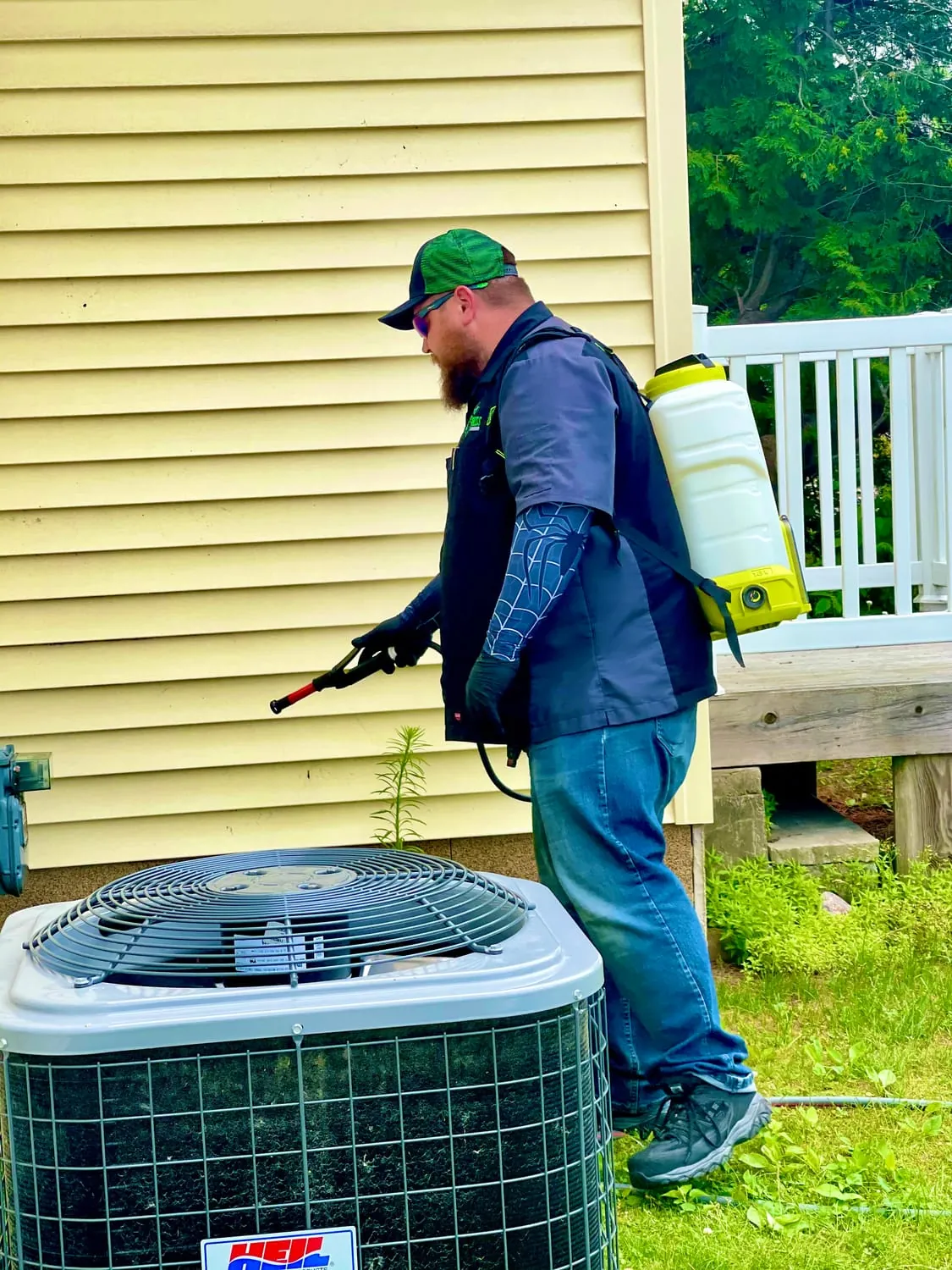
Why yards near Wisconsin water and woods take the heaviest pressure
There is a particular frustration to owning a beautiful piece of Northeast Wisconsin and not being able to sit out in it. You put in the deck, you built the fire pit, the kids have a swing set, the cabin looks out over the water, and then June arrives and the yard belongs to the mosquitoes at dusk and the ticks along the tree line. This is not bad luck or bad housekeeping. It is geography. The same rivers, lakes, wetlands, and woodlots that make this country worth living in are exactly the habitat that mosquitoes and ticks need, and a property that borders any of them is going to feel it.
Mosquitoes need only a little standing water to breed and shaded, humid vegetation to rest in during the day, and the region supplies both in abundance. The Wolf River, the Waupaca Chain O’ Lakes, and the wetlands and low ground scattered across Waupaca, Shawano, Outagamie, Waushara, Brown, and Winnebago counties are permanent, refilling mosquito nurseries, and every lakeside cabin and riverside home sits right at the edge of one. Ticks run on a different but overlapping logic: deer ticks, the ones that can carry Lyme disease, concentrate along the transition edges where a mowed lawn gives way to woods and tall grass, and rural and wooded lots are almost all edge. Put a home in this landscape and you have put it inside two overlapping zones of pressure at once.
BugBoss The X-Terminator runs mosquito and tick yard programs across that country from our shop at 600 S. Main St. in Clintonville. This page lays out what you are actually dealing with, the biology of the pests, how a yard program controls each of them, how the seasons drive the schedule, and where the honest limits are, because a yard program near this much water and woods is about making your yard usable, not about promising a bug-free bubble. It sits alongside our tick and Lyme prevention yard program guide, which goes deeper on the tick and disease side, and our broader residential pest control approach.
Meet the mosquito: biology and breeding sources
To control mosquitoes you have to understand where they come from, and the answer surprises most people. Adult mosquitoes are the half you notice, but they are a small slice of the problem. The population is produced in water, and it takes remarkably little of it. A mosquito lays eggs in or near standing water, the larvae and pupae develop there over roughly a week or two in warm weather, and then the adults emerge to feed and start the cycle again. The critical point is the amount of water required, which is tiny. A container holding no more than a bottle cap’s worth can raise mosquitoes, and any water that sits undisturbed for about a week is a candidate.
That changes where you look. People assume their mosquitoes come from the lake or the river, and while those permanent waters and the wetlands around them do produce mosquitoes, the sources right around the house are usually the small, artificial, overlooked ones. The clogged gutter that holds a channel of water. The saucer under every flowerpot. The corrugated drain extension off the downspout that never fully empties. The folds of a tarp, a boat cover, or a pool cover. The kids’ toys, the wheelbarrow, the bucket by the shed, the birdbath nobody dumps, the old tire, the tree hole, the low spot in the yard that puddles after every rain and takes days to dry. Each of these is a mosquito factory, and because they are small and scattered, they are easy to miss and easy to underestimate.
The adults, meanwhile, do not spend their days out in the open sun. They rest through the heat in cool, shaded, humid cover: dense shrubs, tall grass, the undersides of leaves, ground cover, leaf litter, the shady north sides of buildings and under decks. They come out to feed at dawn and dusk and on overcast days, which is why the yard turns against you exactly when you most want to be in it. Understanding these two facts, that mosquitoes breed in small standing water and rest in shaded vegetation, is the whole foundation of how a yard program controls them.
The yard-program control model: breeding plus resting sites
A mosquito yard program attacks the population on both of the fronts the biology hands you. The first front is source reduction, eliminating the standing-water breeding sites. This starts with a walk of the property to find them, because they are rarely where the homeowner assumes. We look for the containers, the clogged gutters, the drain extensions, the tarps and covers, the low spots, and everything else that holds water, and the ones that can simply be dumped, drained, cleared, or graded away are removed as habitat. For standing water that cannot be eliminated, there are targeted approaches to keep it from producing adults. Every breeding site removed is a batch of mosquitoes that never hatches, which makes source reduction the most durable part of the whole effort.
The second front is the resting-area treatment, sometimes called a barrier treatment. Because adult mosquitoes shelter in shaded, humid vegetation through the day, a targeted residual application to those resting areas, the dense shrubs, the lower foliage, the shady margins and ground cover around the yard, puts the material exactly where the adults spend their downtime. Mosquitoes resting in treated vegetation contact it and die, which knocks down the adult population already present and suppresses it for a period of weeks as new adults land in the same cover. This is not a fog of the open lawn, where there are no mosquitoes to begin with; it is a focused treatment of the vegetation that actually harbors them.
The two fronts work together and neither is complete alone. Source reduction lowers how many new mosquitoes your own property produces, and the resting-area treatment knocks down the adults, including the ones flying in from beyond your property line. Near this much water, some pressure will always arrive from off your land, which is why the resting-area treatment matters even on a yard where you have eliminated every container, and why the program runs on a repeating schedule rather than as a single visit.
Seasonal cadence and event timing
Mosquito control is a program, not an event, because the residual from any treatment fades over a few weeks and new mosquitoes keep arriving from the surrounding landscape and water. The mosquito season here runs roughly from May into September, building through the warm months, and a seasonal program of repeat visits across that window is what maintains lower populations the whole time rather than for a few weeks. The exact cadence is set to the property. A yard backing onto wetland or sitting on the water carries heavier, more constant pressure and benefits from a tighter schedule; a more open lot away from standing water may hold with fewer visits. Because there is no contract, the schedule flexes to what your property actually needs.
Event timing is its own use case, and a popular one. A treatment put down a day or two before an outdoor gathering, a wedding, a graduation party, a family reunion, a weekend at the cabin, knocks the adult population down for the occasion so guests are not fighting mosquitoes through the evening. A one-off pre-event treatment is a short-term knockdown for a specific date, since the residual fades over the following weeks; if you host repeatedly through the summer, a full-season program keeps pressure low across all of it. Either way, we can time treatments around the dates that matter to you.
Lakeside cabins, the Chain O’ Lakes, and the Wolf River
The waterfront properties present the hardest version of the mosquito problem and the one people most want solved, because the whole reason to own a lake cabin is to be outside on the water. A cabin on the Chain O’ Lakes or a home along the Wolf River sits next to a permanent, refilling mosquito nursery that no yard program can drain. It is honest to say that this means the goal is a usable yard, not a mosquito-free one. What a program can do, and do well, is treat the shaded resting vegetation around the areas you actually use, the deck, the fire pit, the path to the dock, the screened porch surroundings, the gathering spots, and eliminate the standing-water breeding sites reachable on your own property, then keep pace with the constant off-water pressure through an ongoing seasonal schedule.
Waterfront properties benefit the most from an ongoing program precisely because the pressure never lets up. A single treatment on a lakeside lot fades against a landscape that keeps producing mosquitoes, whereas a maintained program holds the used zones in a state you can enjoy. It is also worth noting that Brian, the owner, is a licensed Wisconsin commercial applicator whose categories include aquatic and mosquito work, so the treatments around water are done by someone certified for that setting. Seasonal cabins have the added wrinkle of sitting empty for stretches while the surrounding vegetation creeps in, so a visit to knock back the immediate habitat when you open the place up in spring is well worth it; that dovetails with our cabin seasonal pest control guide and, for the marina and campground crowd, our campground, RV, and marina pest control guide.
Ticks: the deer tick versus the wood tick
Ticks run on a different logic than mosquitoes, and the single most important thing to understand is that the tick most people worry about is not the one that gives you Lyme. Two ticks dominate here. The American dog tick, the larger reddish-brown tick most Wisconsinites grew up calling a wood tick, is a genuine nuisance and can carry other illnesses, but it does not transmit Lyme disease, and it is big enough that you usually find it crawling and flick it off before it settles in. The tick that matters for Lyme is the blacklegged tick, the deer tick, and it is much smaller. The nymph stage, which is responsible for most human Lyme cases, is roughly the size of a poppy seed, small enough to miss for the day or two it needs to be attached to transmit. The dangerous tick is the one you do not notice, which is why “I always check for ticks” offers less protection than people assume when they are picturing a fat wood tick.
Deer ticks concentrate where the habitat suits them, and that is the edge. A blacklegged tick dries out and dies in the open, sunny, mowed middle of a lawn, so it does not live there. It lives along the transition zones: where the lawn meets the woods, in tall grass and brush, in leaf litter, along stone walls and woodpiles, and in shady, humid, ground-level cover. On a rural or wooded lot, which describes most properties in the country we serve, that edge habitat is where nearly all the tick exposure happens. This concentration is the reason a yard tick program can work at all, because it means the ticks are not spread evenly across your property but pooled in predictable margins that can be targeted.
We go much deeper on tick identification, the two-year life cycle, the role of mice and deer, safe tick removal, and the personal-protection layers in our tick and Lyme prevention yard program guide, so this page will not duplicate all of it. What follows is the essential picture and how the yard treatment fits.
Lyme and tickborne illness, informationally
Wisconsin is consistently one of the highest-incidence states in the country for Lyme disease, and the blacklegged tick that spreads it is well established across the northern and central parts of the state, including this rural corridor. The same deer tick can also carry anaplasmosis, babesiosis, and the rare but serious Powassan virus, and because a single infected tick can carry more than one of these, a person bitten once can end up with a co-infection. For Lyme specifically, a blacklegged tick generally needs to be attached for roughly a day or more before it can transmit the bacterium, which is why prompt discovery and removal matter so much.
This is informational, not medical advice. If you develop an expanding rash, fever, fatigue, headache, or joint and muscle aches after a tick bite or after time in tick habitat, see a doctor, and do not wait to watch for the classic bull’s-eye rash, since a meaningful share of Lyme cases never show it and the other tickborne illnesses do not cause it at all. Our role is habitat management to reduce the tick population where you live and time outdoors, one layer of protection alongside the medical and personal-protection measures that are yours and your health-care provider’s to manage. We do not diagnose or treat illness, and we will never tell you a yard treatment removes the need for tick checks or a doctor’s visit.
The edge-habitat treatment model and integrated prevention
Because deer ticks pool in the edge and transition zones rather than the open lawn, a yard tick program is a targeted treatment of exactly those margins: the lawn-woods boundary, the tall-grass and brush edges, the leaf-litter and ground-level cover, the stone walls and woodpiles, and the borders of the areas your family uses, the play set, the fire pit, the paths to the dock or the woods. Ticks questing in that treated vegetation contact the material and die, which is why treating the right narrow zones is far more effective than blanketing the open turf where there are no ticks to begin with. Timing is matched to the two Wisconsin activity peaks: a spring treatment ahead of and into the nymph surge, and a fall treatment for the adult surge, with additional treatments through the peak on heavy-pressure properties.
Treatment is one layer, and it works best inside a set of complementary layers rather than as a standalone fix. Landscaping does a great deal of the work: mow and keep grass short, clear leaf litter and brush, put a three-foot strip of gravel or wood chips between the lawn and the woods to create a dry zone ticks are reluctant to cross, move play sets and seating into the sun and away from the wooded edge, relocate woodpiles and bird feeders that shelter the mice ticks feed on, and prune to let sunlight and airflow dry the ground. The through-line is that ticks need shade and humidity, so drier and sunnier means fewer ticks. On the personal side, EPA-registered repellents on skin, permethrin-treated clothing, dressing to keep ticks out, staying to the center of trails, and rigorous daily tick checks with prompt, correct removal carry the load where a yard treatment cannot reach, on hikes, in the deer woods, and on the dog. A yard program lowers the population where you live; the other layers protect you everywhere. None of them replaces the others, and together they compound.
Fleas: from pets and from wildlife
Fleas round out the yard-and-home pest picture, and they carry a surprise for a lot of people, which is that you do not need pets to get them. Fleas do arrive on dogs and cats, but they are just as readily seeded by wildlife: raccoons, opossums, squirrels, feral cats, and other animals denning under a porch or deck, or nesting in an attic, crawlspace, or outbuilding, routinely carry fleas. The animal moves on or is removed, but the eggs and pupae it left behind in the nest and surrounding areas keep hatching and hunting for a host, and in a home without pets that host becomes the people. This is common on rural properties, and it is one reason a company that handles both pest control and wildlife removal can resolve the whole problem rather than treating the fleas while the raccoons, opossums, or squirrels that keep re-seeding them stay put.
The key to flea control is the life cycle, because the fleas you see are the small end of the population. A flea runs through egg, larva, pupa, and adult, and the majority of any infestation at a given moment is not the biting adults but the eggs, larvae, and pupae developing off the host, in carpet, bedding, floor cracks, pet resting areas, and the soil and debris of shaded outdoor spots. The pupal stage is the reason DIY flea efforts fail so often: it is protected inside a cocoon that shrugs off treatment, then hatches over the following days and weeks. A single treatment kills the adults and misses that next wave, so the problem seems to come roaring back. Effective flea control times the environmental treatment to the life cycle, usually with follow-up, and pairs it with vacuuming that helps coax the pupae to hatch where the treatment can reach them. Critically, the environment and the pet must be handled together: environmental treatment addresses the roughly ninety-plus percent of the population living off the host, while a veterinary product handles the adults on the animal. Do one without the other and it rebounds. BugBoss treats the environment on the flea life cycle and coordinates with your veterinary plan; the product on the pet is your vet’s to prescribe.
Why DIY falls short on all three
There is a place for homeowner effort, and we will always tell you what you can do yourself, but the store-shelf approach hits real limits on these three pests. With mosquitoes, the fogger or hose-end spray you buy knocks down the adults in front of you for an afternoon, then wears off within hours to a day while the breeding sites keep producing and new adults keep arriving. Without finding and eliminating the scattered standing-water sources and treating the resting vegetation properly, you are bailing a boat without plugging the hole. Source reduction is genuinely the most valuable thing a homeowner can do, and we encourage it, but it goes further paired with a professional resting-area program near this much water.
With ticks, blanket-spraying the open lawn wastes product where there are no ticks and misses the edge habitat where they actually concentrate, and getting the material into the right transition zones at the right two seasonal peaks is the difference between a treatment that reduces the population and one that mostly reduces your afternoon. With fleas, the pupae defeat single-shot efforts almost by design, and treating the house while ignoring the pet, or the pet while ignoring the wildlife under the deck, leaves the cycle intact. In each case the pattern is the same: the visible pest is the small part, the biology is what governs the outcome, and control that ignores the life cycle and the habitat treats the symptom while the source keeps working.
What a BugBoss program looks like
We run these as programs matched to your property, not as a product sprayed off a truck on a fixed suburban route. It starts with a look at the property to understand the pressure: for mosquitoes, walking the yard to find the standing-water breeding sites and the shaded resting areas; for ticks, identifying the edge and transition habitat and the used zones that need protecting; for fleas, sorting out whether the source is a pet, wildlife, or both. From there the mosquito work pairs source reduction with a targeted resting-area treatment on a seasonal cadence, plus event-timed visits when you need them; the tick work targets the edge zones at the spring and fall peaks and comes with straight advice on the landscaping and personal-protection layers that make it hold; and the flea work treats the environment on the life cycle with follow-up and coordination with your vet, and addresses any wildlife source through our exclusion side.
Throughout, you deal directly with Brian, the owner, a licensed Wisconsin commercial applicator whose categories include aquatic and mosquito work as well as structural, so the treatments near water and around the home are done by someone certified for exactly that. Everything runs with no long-term contract and no cancellation fee, free up-front quotes, and the honest local judgment that a company living and working in this corridor can offer over a national brand dispatching from the Fox Valley on a fixed schedule. It all connects to the rest of what a rural property needs, from general pest control to wildlife in the attic, under one roof and one point of contact, and it is backed by our guarantee.
Realistic expectations
It matters to be straight about what a yard program does and does not do, because overpromising helps no one. A mosquito program near water reduces the population and makes your used areas enjoyable; it does not eliminate every mosquito on a property bordering a lake or wetland, because the surrounding habitat keeps producing them and no treatment drains the lake. A tick program substantially reduces ticks in the treated edge zones and lowers your day-to-day exposure where you live; it does not make you immune to ticks, and you can still pick one up on a hike, from a pet, or beyond the treated areas, which is why the landscaping, repellent, and tick-check layers stay essential. A flea program clears an infestation when the environment and the pet are treated together on the life cycle; it can rebound if the pet goes untreated or a wildlife source keeps re-seeding it.
The realistic and worthwhile goal across all three is to reduce populations and pressure to the point where you can use and enjoy your own yard, cabin, and home, and to give you the informed picture of the complementary steps that keep it that way. That is what an honest program delivers, and it is a lot, especially in this landscape.
When to call BugBoss
Call in spring, as things green up, to get ahead of both the mosquito season and the tick nymph surge before either is in full swing, since getting the first treatments down early sets the whole season up. Call ahead of an outdoor event, a party, a wedding, a reunion, a cabin weekend, when you want the yard knocked down for a specific date. Call when you are finding ticks on people or pets after time in the yard, or when mosquitoes have made the deck or the dock unusable at dusk. Call at the first sign of fleas, itchy bites around the ankles, a pet scratching, tiny jumping insects on the floor, and especially if you have had wildlife denning in or under the structure, since that combination points straight at a wildlife-seeded flea problem worth addressing on both fronts.
BugBoss The X-Terminator is family-owned, founded in 2021 by Brian and Amber Zahringer, licensed and insured, and based right in Clintonville at 600 S. Main St., so response across the surrounding lake and farm country is fast and local. We serve Clintonville, Iola, Manawa, Waupaca, New London, Shawano, and the wider Waupaca, Shawano, Outagamie, Waushara, Brown, and Winnebago county corridor, including the lakeside cabins of the Chain O’ Lakes and the Wolf River. If mosquitoes, ticks, or fleas are keeping you off your own property, reach us at 866-BUGBOSS (866-284-2677), or request a free quote. Local, licensed, no contract, and your yard actually usable again.